Gotong Royong: Working together for resilience in ASEAN
According to an opinion piece by Ms. Narisara Bahalayothin for the ACSDSD, Indonesia and Malaysia’s Gotong Royong represents a powerful way to integrate traditional wisdom and indigenous practices with modern sustainability science.
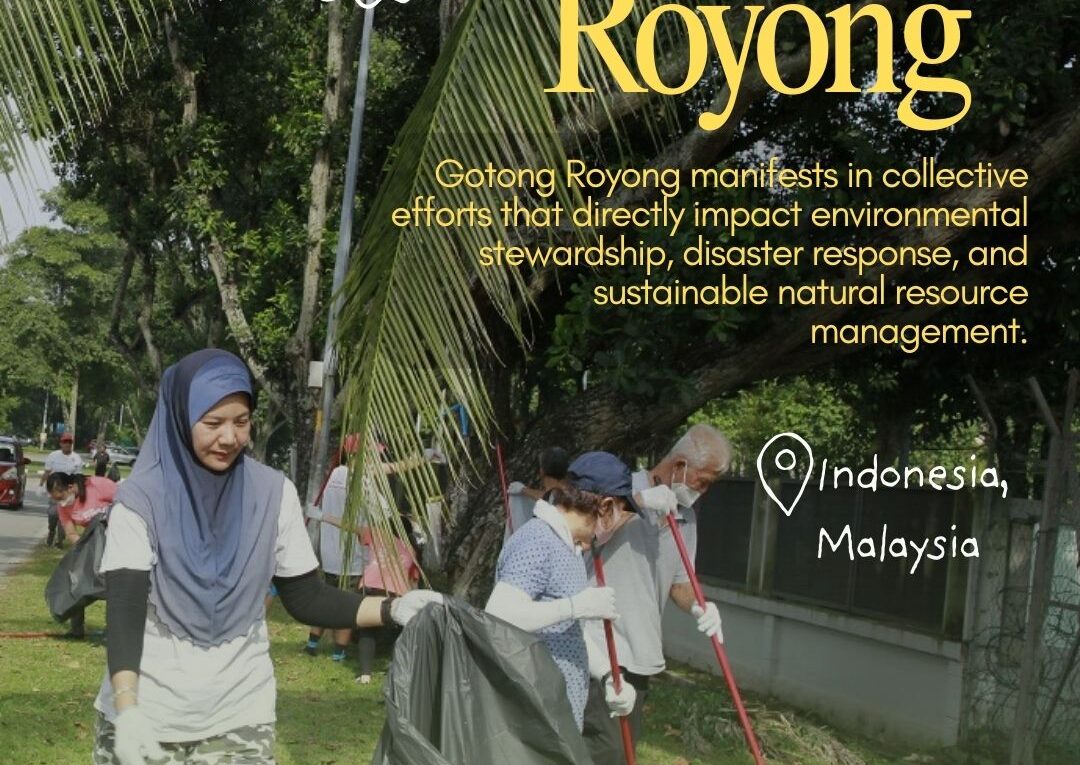
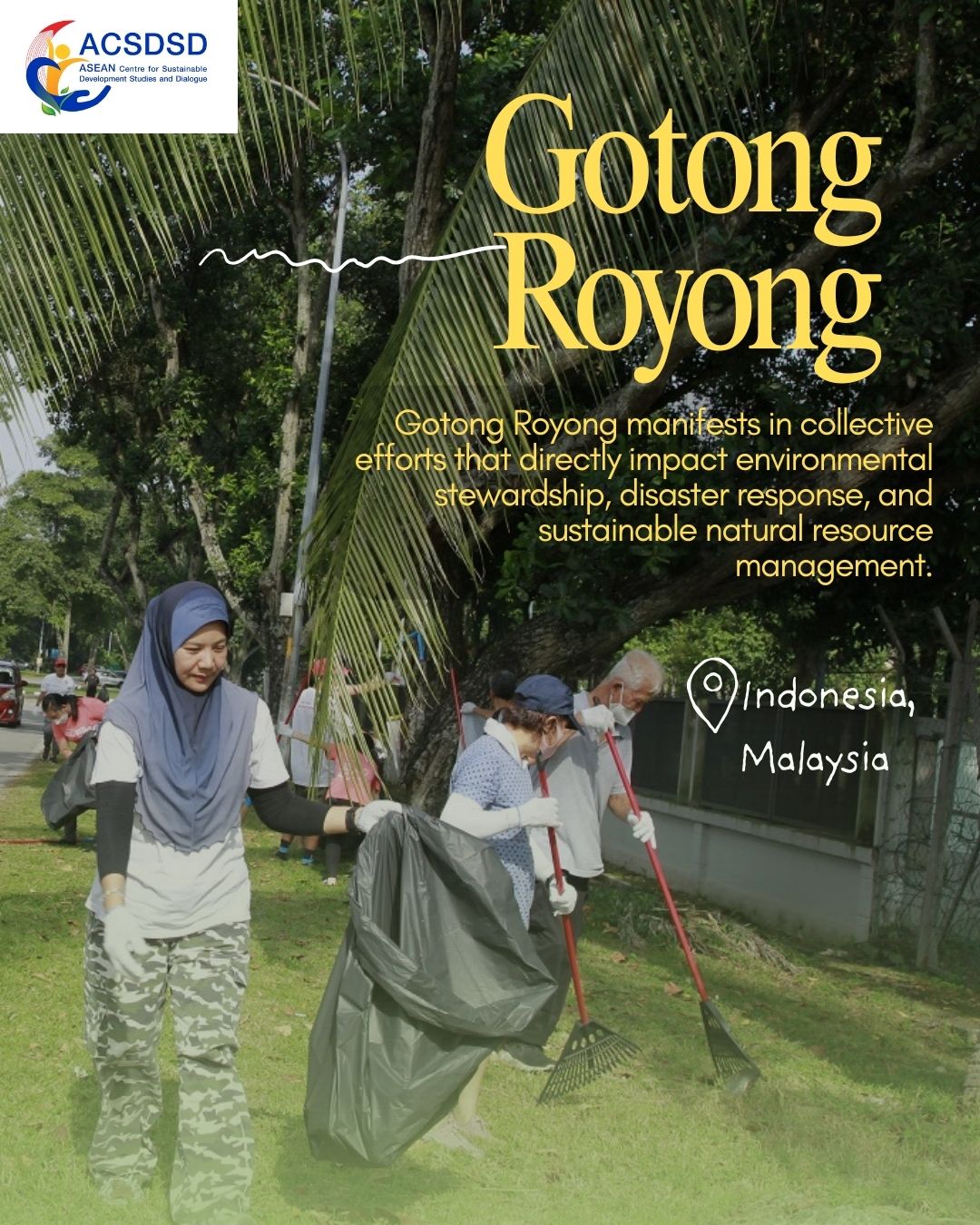
Today, ACSDSD is spotlighting this distinguishing feature of ASEAN’s approach to sustainable development. More than a cultural tradition, Gotong Royong is a living model of collective responsibility and solidarity. The Big Indonesian Dictionary (KBBI) defines it simply as working together—helping one another within a community. In practice, it manifests through everyday acts such as building infrastructure, cleaning shared spaces, or supporting vulnerable neighbors. These collective efforts directly strengthen environmental stewardship, disaster preparedness, and sustainable resource management.
A recent research further illustrates how Gotong Royong is evolving. An open-access article published on 22 March 2025 in Humanities and Social Sciences Communications (Volume 12, Article 411), titled “Shifting collective values: the role of rural women and gotong royong in village fund policy” by M. Alie Humaedi and colleagues, examines how Indonesia’s village fund policy is reshaping traditional practices. The study highlights the pivotal role of rural women, who actively participate in village planning and development projects. Their involvement strengthens accountability, inclusivity, and resilience, while balancing domestic responsibilities with public engagement. This marks a significant shift in collective values from household-centered contributions to active roles in governance and resource management. By embedding women’s participation into procedural gotong royong, the research shows how local traditions can adapt to national policy frameworks for sustainable development, ultimately empowering marginalized voices and reinforcing community solidarity.
Equally vital is ASEAN’s broader commitment to networking and partnerships. As John Emmanuel notes in his article “Gotong Royong – A way of life that goes beyond tradition”, the practice remains vibrant in modern society. “When floods hit Jakarta, communities don’t wait for someone else to fix things, they show up for each other. In cities, people organise clean-ups not because they have to, but because they know it’s the only way to keep their neighbourhood going.”
For ACSDSD, this spirit of people-oriented partnerships is central to fostering resilience in the face of climate disasters. Gotong Royong, both traditional and evolving, continues to anchor ASEAN’s solidarity towards the ASEAN Vision 2045.
ACSDSD will continue to advocate sustainable development pathways that are not only technically effective but are deeply embedded in the region’s lived realities and collective aspirations. This integration of diverse local wisdom into modern sustainability frameworks is seen as essential to achieving the 2030 Sustainable Development Agenda and securing ASEAN’s resilience in an era of rapid change.
Source:
📚 Journal Article
Humaedi, M. A., Wibowo, D. P., Hariyanto, W., & others. (2025). Shifting collective values: The role of rural women and gotong royong in village fund policy. Humanities and Social Sciences Communications, 12, 411. https://doi.org/10.1057/s41599-025-04577-6
🌐 Web Sources
ACSDSD. (2025). Opinion: Future direction of ACSDSD. ASEAN Centre for Sustainable Development Studies and Dialogue. https://www.acsdsd.org/news/opinion-future-direction-acsdsd/
Instant Karma Magazine. (n.d.). Gotong royong. https://instantkarmamag.com/article/gotong-royong/
🌱 ASEAN Complementarities 2.0 Priority Areas (GREEN Agenda)
Resilience against Climate Change .
Effective Digital Transformation .